
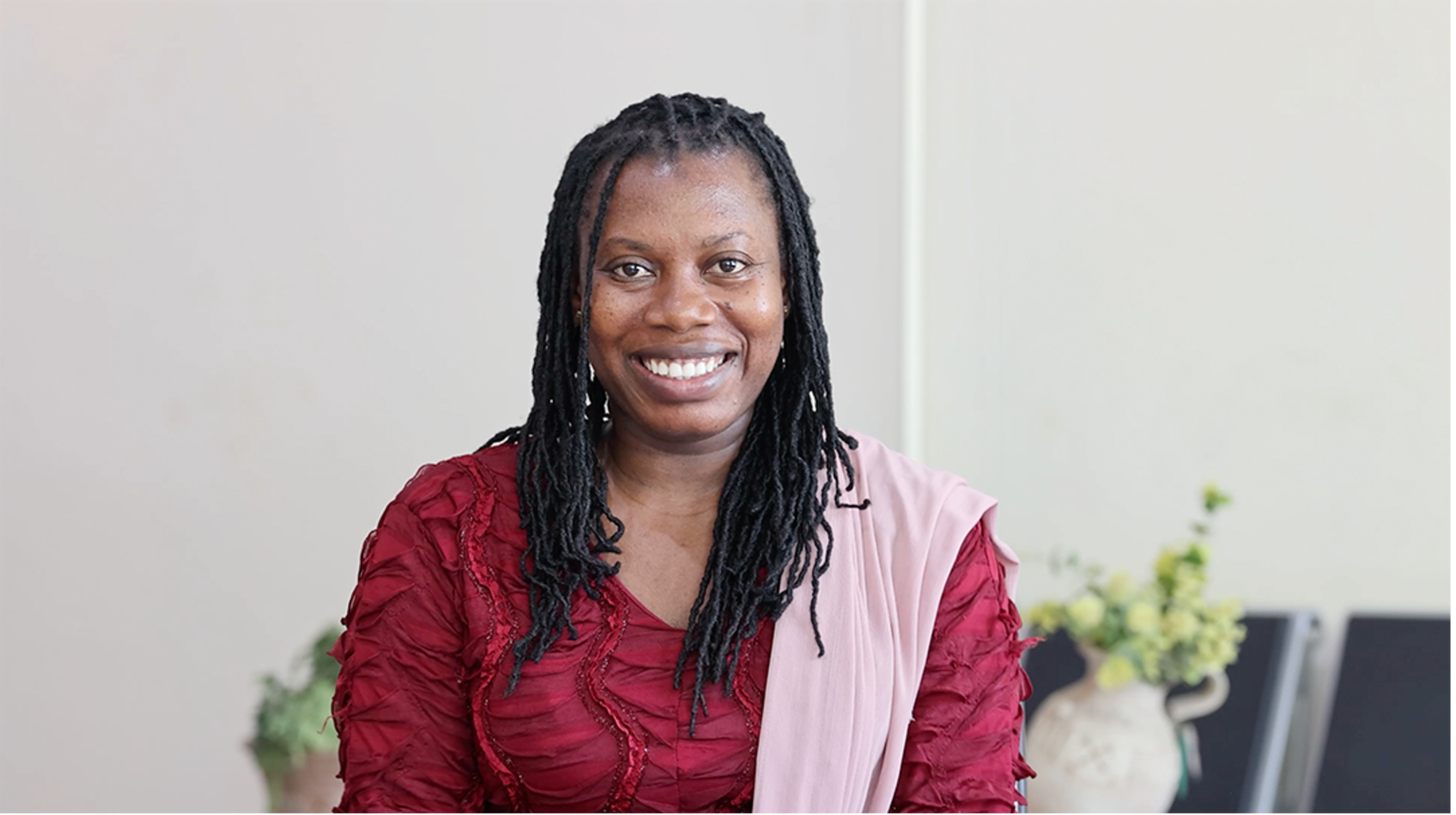
Long before she founded her social enterprise, Selima Alhassan Nakro was already seeing the problem up close.
Working with a microfinance institution in Northern Ghana, she spent her days moving between markets, farms, and rural communities, providing financial services to women traders and farmers. The work placed her directly at the intersection of agriculture and finance, where she quickly realized something was not working the way it should.
The women she met were running small agricultural businesses, feeding their families, and supporting local markets. They borrowed informally, saved in groups, and reinvested in their farms season after season. By every practical measure, they were creditworthy.
Yet when it came to the formal financial system, they were largely invisible.
“I was on the ground every day, watching the gaps that women who were creditworthy by every practical measure faced, yet invisible to every formal system around them.”
Selima understood the problem because she had lived it alongside the communities she served. But understanding the problem was only the beginning. She needed the knowledge and tools to turn those insights into solutions that could work at scale.
That opportunity came when she joined the Mastercard Foundation FIRST+II Inclusive Finance Scholarship Program, being implemented by CapitalPlus Exchange in partnership with Digital Frontiers Institute
Through the courses offered, Selima began to see rural financial systems in an entirely new way. One of the most powerful insights she gained was that the term “smallholder farmer” often hides a much more complex reality.
Some farmers produce mainly to feed their families, selling only small surpluses when they can. Others are beginning to transition into more market-oriented production. A smaller group farms primarily for commercial markets. Each group faces different financial realities, yet financial products often treat them as if they are the same.
Recognizing these differences changed how Selima approached the problem. Rather than trying to design a solution for every farmer at once, she began focusing on those in transition, farmers moving from subsistence farming toward market production. With the right support, these farmers have the potential to grow their businesses, improve household income, and strengthen local food systems.
Another lesson that stayed with her was the importance of human-centered design. Instead of starting with financial products and trying to fit farmers into them, the process begins with understanding people, their environments, their constraints, and the decisions they make every day.
Today, Selima leads H-Anaya Tech, a social enterprise creating cooperative infrastructure for women-led agricultural communities across Northern Ghana. The organization works to organize women farmers into cooperatives and connect them to financial services, markets, and agricultural support systems that were never originally designed with them in mind.
For Selima, financial inclusion is not simply about expanding access to financial services.
“Financial inclusion is not about bringing people into the system; it is about building systems that deserve to include them.” That belief now guides the work of H-Anaya.
The enterprise collaborates with financial institutions, agricultural input suppliers, aggregators, and market actors to create practical pathways for farmers to access finance, inputs, and buyers. By strengthening these connections, the organization helps ensure that women farmers are not only organized but also integrated into the broader agricultural value chain.
One of the most important lessons Selima took from the program was that agricultural finance challenges cannot be solved by one organization alone.
Agriculture is an ecosystem where farmers, financial institutions, suppliers, and markets depend on one another. Instead of trying to solve every challenge independently, she learned to focus on where her organization could create the greatest value while working alongside other actors within that system.
The ripple effect of the program continues to shape her work. Selima now actively encourages others interested in inclusive finance to pursue similar training, and she has made it a requirement for members of her own team to take at least one course with the Digital Frontiers Institute.
“H-Anaya exists because of what I saw before the scholarship. But it is being built with what I learned during it.” Selima’s journey reflects the broader ambition of the FIRST+II program: strengthening financial systems by equipping leaders with the knowledge, networks, and confidence to design inclusive solutions.
Through her work, women farmers across Northern Ghana are gaining stronger access to financial services, improved connections to markets, and new opportunities to grow their agricultural enterprises.
For many of these farmers, this shift represents more than access to finance. It represents the possibility of building livelihoods that are more resilient, more profitable, and more visible within the systems that shape their economic futures.


