From 7 Months to 7 Days: How 7 Rural Banks in Ghana Slashed Loan Waiting Periods
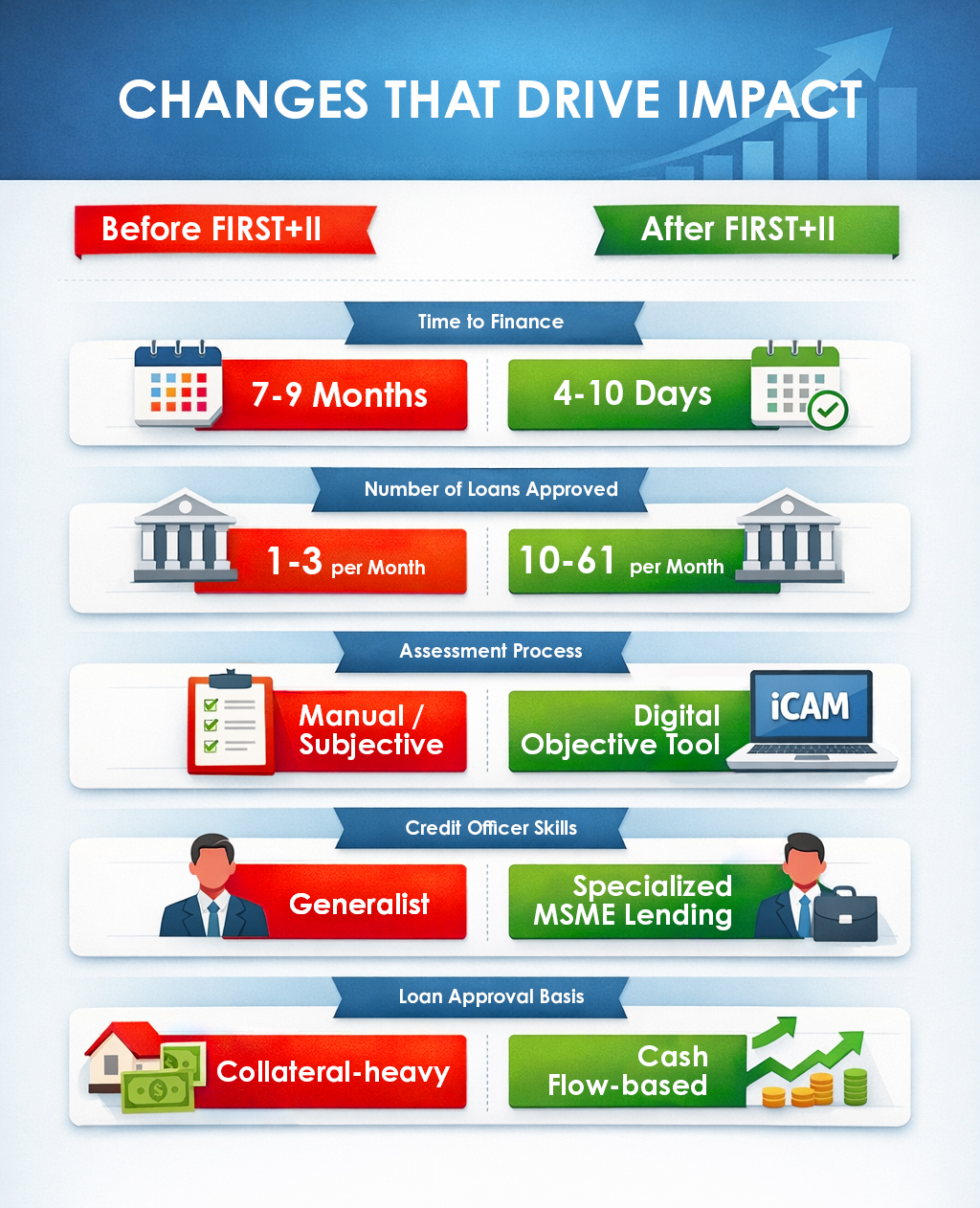
For decades, a Ghanaian smallholder farmer or a rural entrepreneur’s journey to obtain a bank loan was a marathon of patience. In many rural communities, the process from the first application to the final disbursement could stretch to over 7 months. Rural banks frequently require clients to build up savings deposits for 6 months, after which they may submit a loan application; the banks then determine applicants’ repayment capacity based on their monthly savings. After applying, clients often wait another 3 to 8 weeks for their applications to be processed and loans disbursed, adding up to at least 7 months to access much-needed finance.
Because their money must be in the savings account to be eligible for a loan, farmers and entrepreneurs cannot use it for their businesses. For a farmer wanting to buy seeds before the rains or a trader needing inventory for a peak season, this delay isn’t just an inconvenience; it can be a recipe for business failure. The rains certainly do not respect a 7-month waiting period, and neither do peak business season opportunities. Would-be borrowers who cannot set aside the required deposits for 6 months nor wait 7 months for a loan are simply locked out of finance.
Today, that narrative is changing. Under the FIRST+II (Financial Institution Resilience and STrengthening) Program, a strategic partnership between CapitalPlus Exchange (CapPlus) and the Mastercard Foundation, seven Ghanaian rural banks are a reminder that rural communities are hubs of progress and innovation. By overhauling credit systems and embracing cash flow-based lending tools, these 7 rural banks have successfully compressed that 7-month ordeal into a 7-day cruise to loan disbursements for farmers and rural MSMEs.
The Bottleneck: Why Loan Processing Can Take Longer than Expected
The traditional lending model in Ghana’s rural and community banks is plagued by risk aversion and manual processes, contributing to the slow turnaround time.
The Game Changer: the FIRST+II Solution
The FIRST+II program was designed to solve systemic barriers such as these, and it does so by focusing on capacity building and technical innovation. FIRST+II’s Access to Finance team designed and is now deploying an unsecured MSME loan product grounded in cash flow-based lending. While the model itself is not new, it is novel to most rural banks in Ghana.
In each of the 7 FIs, CapPlus has embedded a long-term consultant who has hands-on experience in unsecured and cash flow-based MSME lending in Ghana and across Africa. In addition, CapPlus has developed and installed the Integrated Creditworthiness Appraisal Module (iCAM) as the primary appraisal tool to assess borrowers’ ability and willingness to pay.
iCAM is a digital tool tailored for each bank that has revolutionized the appraisal process by replacing the 6-month mandatory deposit with:
The embedded consultant is responsible for working closely with the bank’s senior management team to:
Clearly, this is not a touch-and-go approach to capacity building. This is a hands-on and long-term approach to driving systemic change that benefits farmers and entrepreneurs as well as the banks.
Impact on Businesses, Women, and Youth
Reducing the lending process from 7 months to 7 days is more than an impressive outcome; it’s a lifeline for Ghana’s rural businesses and farmers. In just the first four months of implementation, the seven banks achieved an average turnaround time of 6.8 days from application to disbursement and disbursed GHS 8.98 million to 438 farmers and businesses. Women and youth especially benefit since they tend to have less collateral and savings: women received 74% of the loans and 66% of the total loan value, and youth received 33% of the loans and 23% of the total loan value. By reducing the waiting period, banks have also seen a surge in first-time borrowers, especially people younger than 36 years.
When loan disbursements align with the agricultural seasons or market cycles, default risk drops significantly as the money is put to work exactly when it is needed. Over the next 9 months, FIRST+II aims to disburse GHS 120 million through the seven banks and further reduce turnaround time to an average of 5 days for new borrowers and 3 days for repeat borrowers.
A Model for the Future and the Continent
This preliminary FIRST+II success suggests that the financing gap in Ghana and Africa isn't caused by a lack of capital. These pilots indicate that insufficient technical capacity within financial institutions is creating at least a portion of the financing gap. The FIRST+II rural bank partners are demonstrating that building their skills in product design and credit appraisals and using appropriate digital tools may enable them to compete with urban commercial banks while staying true to their rural development mission.
Shortening the loan process from 7 months to 7 days and subsequently attracting many new borrowers – especially women and youth – is a testament to the power of combining technical expertise with local financial institutions’ resolve and commitment. So far, this model appears to be worth repeating and deepening across the country, and ultimately across the continent.
Thank you to our 7 partner rural banks that are demonstrating their unending commitment to serving clients typically excluded from the financial system. Their openness to change is beyond commendation, and their impact upon the women, youth, farmers, and entrepreneurs who have benefited from their boldness will extend far beyond these individuals into their communities.